MADE-TO-MEASURE WINDOW FURNISHINGS FOR SYDNEY HOMES

Balancing Form and Flow: A Room Defined by Precision and Softness
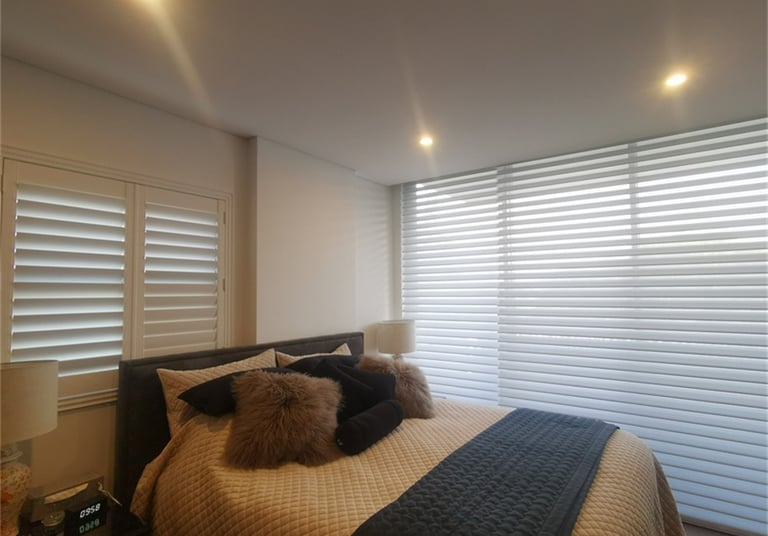
Captured on a smartphone with no digital editing— only natural light and real moments. Customers say the final finish looks even better in person. © Ms. Curtain
4/15/20262 min read
Balancing Form and Flow: A Room Defined by both Precision and Softness ✨
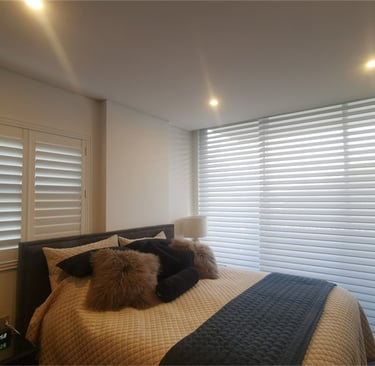
Judie is a discerning homeowner with a refined appreciation for quality living and exacting standards for cleanliness and order. In her newly designed master bedroom in the Hills Shire, every detail reflects her commitment to both elegance and precision. We introduced two distinct window treatments side by side—plantation shutters on one window and triple shade blinds (also known as zebra blinds) on the other—creating a balanced interplay of structure and softness within the same space. The result is a carefully balanced space that combines architectural structure with modern softness.
Rather than competing, these two styles complement each other, each solving a different functional and aesthetic need.
The Strength of Shutters — Structure, Precision, Timeless Appeal
The shutters on the left window immediately introduce a sense of order and permanence.
Crisp horizontal blades create strong visual lines
Solid framing gives the window an architectural presence
Precise tilt control allows adjustable light and privacy
Shutters are often chosen when:
A clean, built-in look is desired
The window itself should feel like part of the structure
Long-term durability and value are priorities
In this room, the shutters anchor the space. They feel grounded, symmetrical, and classic, pairing well with the neutral palette and structured bedding.
The Softness of Triple Shade Blinds — Light, Flow, and Modern Texture
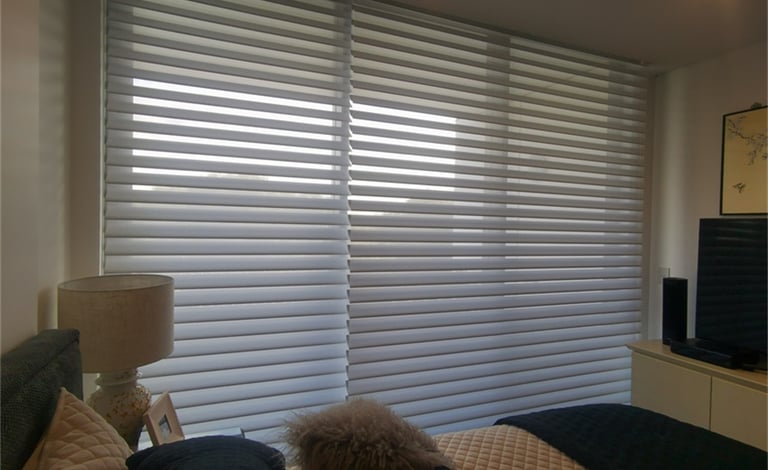
On the right, the triple shade blinds introduce a completely different experience.
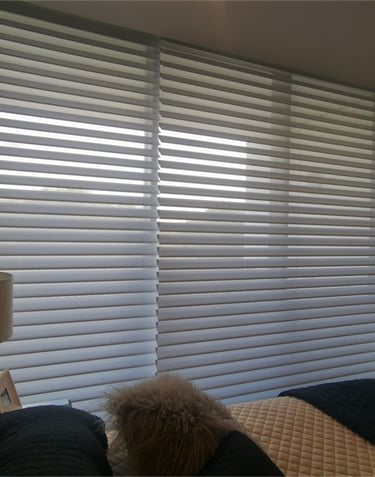
Layered sheer and opaque bands diffuse natural light
Soft horizontal transitions reduce visual heaviness
Continuous fabric movement adds a sense of flow
Unlike shutters, these blinds don’t define the window—they soften it.
They are ideal when:
You want filtered daylight without harsh shadows
The room benefits from a lighter, more relaxed feel
A modern, minimal aesthetic is preferred
Here, they bring gentle brightness into the bedroom, making the space feel open and calm.
The Contrast — Why This Combination Works
What makes this room interesting is not just the individual treatments, but the intentional contrast between them.
Feature Shutters Triple Shade Blinds
Visual Weight Solid, structured Light, soft
Light Control Precise tilt Gradual diffusion
Style Classic, architectural Modern, minimal
Texture Hard surface Fabric layers
Presence Statement feature Subtle background
This contrast creates depth within the room:
The shutters define one side
The blinds relax the other
Together, they avoid monotony and elevate the overall design
Design Insight — Mixing Window Treatments Thoughtfully
Using two different window coverings in one room is not a compromise—it’s a strategy.
This approach works best when:
Windows serve different functional roles (privacy vs. light filtering)
There is a clear visual hierarchy
Colours remain consistent to unify the space
In this bedroom, both treatments are kept in a soft white palette, ensuring harmony despite the contrast in form.
Final Thought
This space demonstrates that window furnishings don’t have to match to work together.
By combining the structure of shutters with the soft elegance of triple shade blinds, the room achieves a layered, high-end feel—one that is both practical and visually refined.


Copyright © 2026 Ihouse Australia Pty Ltd.
Made-to-measure curtains, blinds and shutters for Sydney homes and commercial spaces.


NAVIGATION
Mon - Sat, 9:30 am - 5:00pm


CONTACT
FOLLOW US